
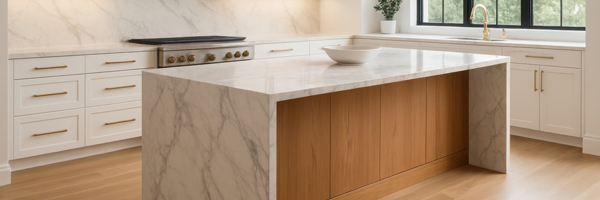
There’s a reason statement surfaces keep showing up in newer homes and thoughtful remodels alike: they do more than finish a room. They shape how the whole space feels. If your kitchen already has clean lines and open sightlines, adding a glowing backsplash or a dramatic stone edge can turn it from simply updated to unforgettable. The key is knowing when these features add polish—and when they start to feel like too much.
Why these details work so well in modern spaces
Backlit stone and waterfall edges both lean into what modern design does best: letting materials speak for themselves. A waterfall detail carries the countertop down the side of an island in one continuous plane, which creates a sculptural effect without adding visual clutter. Backlighting does something different. It highlights veining, depth, and translucence, especially in select stones, so the surface feels almost architectural after dark.
Used together, they can be striking. But balance matters. In many homes, one strong move is enough. If the island already has bold movement, for example, lighting the backsplash may be the better way to layer interest without crowding the room. In a broader full kitchen remodeling project, these choices work best when they’re planned alongside cabinetry, appliance placement, and traffic flow—not treated as last-minute upgrades.
Material choice matters more than the trend
Not every slab is a good candidate for these features. For backlighting, translucency is the deciding factor. Some natural stones allow light to pass through beautifully, while many quartz surfaces are better suited to the crisp, seamless look of a waterfall edge. That’s why it helps to compare the featured countertop brands with your goals in mind rather than starting with color alone.
Colorado homes also ask a little more from surface materials. Strong sun exposure can change how a slab reads throughout the day, and dry air can make the surrounding finishes feel sharper and brighter than expected. In that setting, a high-contrast pattern may look stunning in the showroom but overwhelming once installed. We usually guide clients toward selections that hold their character in both morning light and evening ambience, especially when the surface is meant to be the star.
Where to use a waterfall edge—and where to stop
A waterfall edge tends to look most natural on an island because it gives the room a clear focal point. It can also protect the cabinet end panel in busy households, which is a practical bonus. What makes it successful, though, is proportion. Thick dramatic veining on a small island can feel heavy, while a quieter pattern often gives the detail room to shine.
This is also where execution matters. Veins need to align cleanly at the corner, overhangs should feel intentional, and the supporting surfaces have to be prepared with precision. Our five-step installation process is designed for exactly that kind of detail work, where measurement and fit affect the final look as much as the slab itself.
Backlighting works best when it feels intentional
Lighting behind stone can be beautiful, but it should support the room rather than steal every glance. A bar wall, backsplash, or vanity feature often carries the effect better than trying to illuminate every surface. The glow should feel warm and integrated, not theatrical.
That’s one reason many homeowners like to start by browsing completed remodels. Seeing how strong materials behave in real rooms makes it easier to judge scale, contrast, and how much drama you actually want to live with every day. In a sleek home near Aurora, that restraint often makes the final result feel more custom, not less.
If you’re weighing whether a waterfall edge, backlit stone, or both make sense for your home, we’d be glad to talk it through with you. The best statement details are the ones that still feel timeless a few years from now. When you’re ready, you can request a free estimate.