
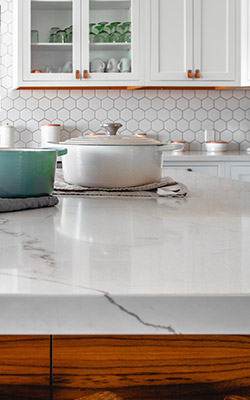
The area around your cooktop takes a daily beating. One minute it is splattered with oil, the next it is holding a hot pan, catching steam from a simmering pot, or collecting whatever drips from dinner prep. That is why this stretch of surface deserves more thought than homeowners sometimes give it. A beautiful slab matters, of course, but in a hardworking kitchen, performance has to live alongside style.
Why the cooktop zone is different
Not every part of your kitchen is asked to do the same job. The perimeter near the range deals with higher heat, more frequent wiping, and faster messes than an island used mostly for serving or homework. Around the cooktop, the best material is one that can handle temperature shifts without fuss, resists staining, and does not leave you worrying over every splash of tomato sauce or cooking oil.
That is also where finish and color come into play. A polished white surface may look bright and airy, but if you cook often, it can show every smear. A softly patterned quartz or a natural stone with movement tends to forgive the realities of everyday life a little better. If you are comparing the featured countertop brands, pay attention not just to color, but to maintenance expectations and how each line performs in a busy kitchen.
Heat resistance is only part of the story
Homeowners often ask for the “most heat-resistant” option, but that question is a little too narrow. Yes, you want a surface that tolerates occasional warmth. But the bigger issue is how the material behaves over years of use. Repeated thermal shock, steam exposure, and residue from cooking can all affect the look of a counter if it is not the right fit for the space.
In Colorado homes, low humidity and big seasonal swings can also influence how adjoining materials respond. Your countertop does not live in isolation; it meets walls, trim, and storage components that expand and contract differently over time. That is one reason a thoughtful full kitchen remodeling project matters so much. Good design is not just about picking a pretty surface. It is about planning the whole cooking zone so the pieces work together.
Don’t overlook what sits below
Countertop decisions near the cooktop also affect your cabinetry more than people expect. Depth, overhang, edge profile, and seam placement all change how comfortable the space feels while you cook. Even the visual weight of the slab can make upper and lower storage feel either balanced or crowded.
This is where material coordination matters. Warm wood tones can soften a bold stone pattern, while a quieter door style can keep a dramatic surface from taking over the room. If you are still sorting through door styles, finishes, and construction levels, browsing the cabinet brands we carry can help you see which lines pair well with the kind of countertop performance you need.
Installation determines how well it all performs
Even an excellent product can disappoint if the fit is off. Tight clearances near the range, uneven walls, and rushed seams are often what make a kitchen feel less finished, not the material itself. Around a cooktop, accuracy matters because this is where visual lines are easy to notice and messes are constant.
That is why homeowners in Castle Rock and across the Denver Metro often benefit from understanding the five-step installation process before materials are ordered. Careful measurement, solid prep, and a clean final walkthrough do more than protect your investment. They help the surface function the way it should from day one.
A cooktop zone should feel easy to live with: durable, easy to wipe down, and visually connected to the rest of the room. If you are weighing options for a home in Parker or nearby, the right answer usually comes from balancing heat tolerance, maintenance, and the way your cabinets and counters work together. When you are ready to talk through ideas, you can request a free estimate.